Radical change is difficult to manage
Progressive change remains the preferred option. Large systems are complex and involve relationships between people and unites of people (organizations) with intertwined interests, affecting a change is usually something that needs to be done progressively to limit the side effects of that change. In addition, most of the time, social, political and economic environments are stable. If you pick a random point in time there is rarely a need for big changes or for radical decision making. Despite this apparent stability, there are situations where major events creep out of the woodwork and shatter the monotony of our daily lives. When these events do happen, how do we know that an organization or nation should attempt to affect radical change rather than progressive improvements?
The core challenge is that there is no way to accurately predict uprisings, revolutions, market changes or economic downturns. There are at least three principal reasons why a sudden change in a stable system is so unpredictable.

The first reason is the well documented phenomenon commonly known as the “Black Swan” effect. This “Black Swan” is so named because Europeans thought all Swans were white until they discovered Black Swans in Australia. The surprise of finding a Black Swan was utterly unpredictable based on all prior European knowledge of Swans being white. We can boil down this type or issue to a set of false assumptions or a simple ignorance of the possible varieties available. As Donald Rumsfeld said, it is the “unknown unknowns” or things we do not know we do not know that can really surprise us.
The second type of surprise are “known unknowns”. For example, we know there is a certain level of discontent in all societies and a certain number of unhappy citizens, but we do not know when they will mobilize for change. Another example is our knowledge of the degradation of the natural environment due to global warming and other effects, but we do not know when a massive storm will appear of when the arctic permafrost will melt, releasing tremendous amounts of greenhouse gases that could change the ocean currents, leading to massive weather changes and likely economic collapse. Referred to as a Tipping point, some stable systems quickly flip into another state and it is tremendously hard to know where that point lies. If we had the ability to accurately predict big changes, we would simply avoid them. If a dictator can determine that a revolution or uprising is coming, he would act and the uprising would never occur. If the USSR had known the system was crashing in the late 80s, they may have done more to try to prevent it. Instead, leaders are nearly always caught flat footed when big changes arrive. The unpredictability of change makes leadership that much more important – it is easy to govern in times of stability, it is much, much harder to govern in times of change.

The third is the simple challenge or inertia in the face of a clear change. This is most common in the business world where new technologies regularly upset industries. It was pretty clear that internet penetration and bandwidth were constantly increasing since the 1990s. It was also clear that Blockbuster revenues and profits were progressively decreasing during that period. Despite this clear and present danger, Blockbuster made little to no effort to adapt their business model and emulate companies like Netflix (or buy them). Part of it was the inertia of a large organization and part of it was their business model which was based on retail outlines, physical assets and late fees. There are very few companies that successfully navigate a change in business models.

In stable environments, systems are usually robust and mechanic enough to survive idiotic leadership. Rome’s imperial machine trudged along through the reigns of buffoons such as Nero and Caligula (who named a hose Senator), but later struggled when real change reared its head. The real change that brought down the empire was likely a combination of religion, discontent in Northern Europe, falling production the mines in Spain, a lack of new territories to rape and pillage and a crumbling of social cohesion. External radical change is very, very hard to manage and this is especially true if it is multi-pronged and not from a single source (i.e. a clear enemy).
When we are forced to embrace radical change to survive, leadership is typically the determining factor in a successful outcome. Whether your own organization is undergoing radical change or whether it is an external change (i.e. change in technology or the market), the most critical thing is for the leadership to be strong, wise and be able to act quickly. The wrong decisions can have dire consequences, but no decision is usually even worse. Three historical examples of poorly managed radical change include the Spanish invasion of the Americas, the closing of China and the French Revolution.

When Cortès disembarked in Central America, the native Aztecs were dominant in the region. Cortès and his few dozen Spaniards were able to mobilize smaller rival clans and take advantage of the Aztecs lack of knowledge of Spaniards to topple a regime that had been in power for centuries. Had the Aztec leaders overcome their own history with rival clans and found compromise with them or had the Aztecs taken the time to gather intelligence on Cortès (even post landing) they likely could have stopped him or at least significantly delayed the devastation of the Americas by the European invaders. Instead, they went head on against Cortès based on their past experience with other tribes and the Aztecs were utterly destroyed.
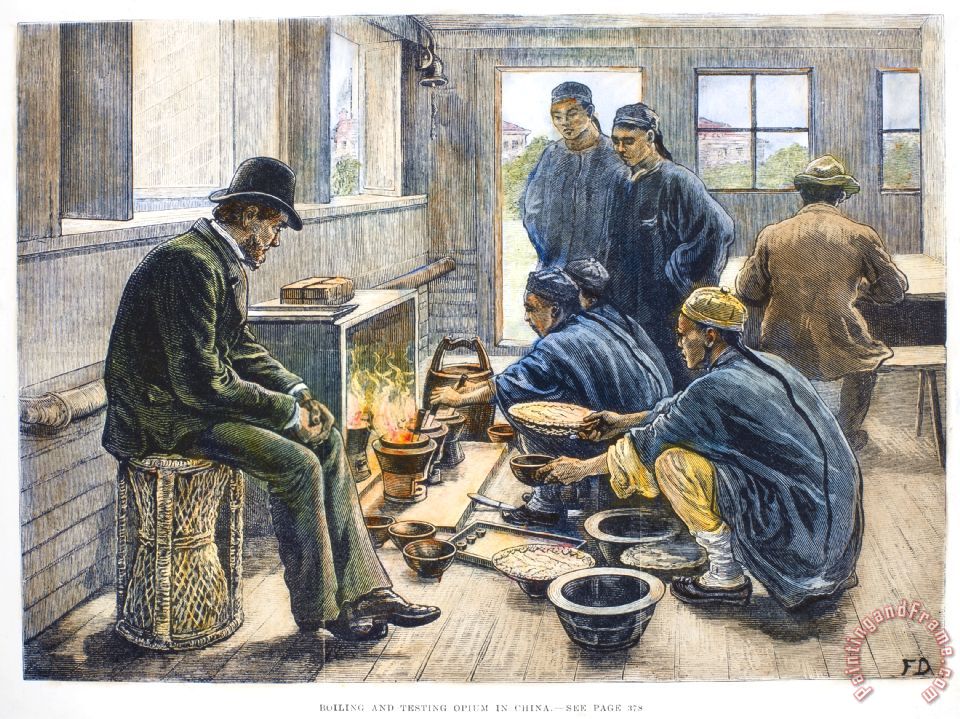
For most of human history, China was the most powerful and wealthiest nation in the world. Yet, after their leadership decided to close the country in the early 15th century the country progressively became poor and backwards. The once mighty country became so weak that small Europeans armies were able to force China to give up parts of its territory and allow the import Opium so that Europeans could make a handsome profit at the cost of millions of drugged Chinese. This trend of submission continued until the Chinese revolutions in the early 20th century. A fifty year period of turmoil and challenge followed and only ended with death of Mao. While the communist regime provided some benefits in the form of longer lifespan, dignity for peasant workers and freedom from servitude. Despite the progress China was headed in a very bad direction when Mao died in 1976. At the time, there was a significant and complex power struggle that could have gone a different way. Instead of the election of Deng Xiaoping as leader, the communist party could have chosen a safer bet in the form of a Mao stooge who would have prolonged or worsened the situation. The Chinese miracle rests largely on the outstanding leadership of Deng, without him it is hard to imagine China as it is today. Deng ably navigated the factions within the communist party and throughout China, opening up the country and starting an economic miracle no one could have predicted.
For most of European history, France was the wealthiest and most powerful nation in Europe. It had a larger territory and a stronger government than most rival powers. Despite its apparent advantage, when uprisings began in the late 18th century, the French king failed to compromise or react in a semi intelligent way. His failure to take a quick decision for either a constitutional monarchy (like the English) or a violent crackdown against the Republicans probably led to his beheading and the decades of violence of the French Revolution and the Napoleonic wars. Had the king taken a more moderate tone it seems likely that the aristocracy would have survived like the other European aristocracies that still exist today. A failure to lead in times of radical change led to the loss of many heads.
In a more modern and less violent context, this failure to enact radical change is visible in the corporate world. The number of large, dominant companies who fail to act is astounding. Despite their McKinsey consultants and their Harvard MBAs, company after company fail to change in the face of clear and present danger. The list is long and is not limited to the commonly known cases of failure – Nokia, BlockBuster, Kodak, Sears and more. As Amazon leader Jeff Bezzos said, even “Amazon will eventually go bankrupt”. Like it or not, our external environment will change and we must adapt or die. How can know when to make radical changes to a stable organization that is facing a changing environment?
The need to made radical change lies not only with the dominant powers, but also with the opposition that is trying to change things. The Arab uprisings of 2010-2015 held tremendous promise, but ultimately mostly failed to affect progress. Libya is in a full out civil war, Bashar Al-Assad seems poised to remain in power, the Egyptian military is stronger than ever and Yemen is blood stained battlefield. Only Tunisia seems to have improved its situation. Was this outcome a failure of leadership? I do not know enough about these complex situations to comment, but it seems that to unseat a strongman government, there must be a high level of cohesiveness in the opposition forces. If there is not a high level of cohesion or a controlling faction in the uprisings, the division of the opposition ultimately leads to its downfall. The Bolsheviks took control of the Russian revolution in 1917 and the Jacobins did a similar move during the French Revolution – ensuring the revolution happened. The failure of a strong willed party to take control in the Arab Uprisings and remove the pillars of support from the old regimes may may have led to their failure.
But the question remains, when do you know that radical change is needed? Even if we know radical change is needed, how do we mobilize the forces and undercut the current structure. The most well-known how-to manual for starting a revolution is the recently deceased Gene Sharp’s “From Dictatorship to Democracy”, also a documentary. But, the book does not clearly identify how to know when to start such a revolution – only how to conduct one.
Of course the flip side to all of this is to ask when radical change is not needed and should be stopped before it creates more problems than it solves. In Canada, there was attempted revolutions (or at least uprisings) in 1837 as well as Québec independence efforts in 1980 and 1995, all of which failed. Would Québec or Canada be better had they succeeded? We do not know, but stopping those radical changes certainly came down to questions of leadership at the time.
I do not have any sort of conclusion or specific proposal on the necessity of radical change. The topic is too vast and complex to offer any simple analysis. But, despite it complexity, I believe that in the next twenty years we will be confronted with a number of questions that may require radical change in our society. The list is long, but my top ten external events that will require us to choose between radical change or dire consequences are:
- The rise of China,
- Resistance to antibiotics,
- Collapse of US power,
- Collapse of the US dollar as our reserve currently,
- Disintegration of the European Union,
- Uprising in Saudi Arabia,
- Impacts of global warming and pollution,
- Ecological system collapse and impacts on our food supply,
- Housing market crash in China and elsewhere, and
- Cybersecurity issues.
All of the above issues are highly unpredictable in terms of when or where they may happen or what the consequences might be. The assassination of the Archduke of the Austro-Hungarian empire led to the slaughter of millions of people and the restructuring of the entire world. It was a match that set a tinderbox alight. No one knows what big event may alter our realities and is therefore critical that our leaders and systems be designed to avoid catastrophic failures such as Blockbuster, the Aztec empire or the French revolution. We must prepare ourselves for the eventuality of large changes by increasing the robustness, flexibility and adaptability of our countries and organizations.
Published on January 20, 2019[:en]The Problems with the Basic Income Discourse[:]
[:en]Basic Income came into the mainstream media three or four years ago when Switzerland launched a petition for a national referendum. Since then, the mouvement has grown but it seems to be stalling in its growth. Pilot projects have been ended or closed and other projects have publicly explained how hard it is to run a basic income project. Nevertheless, thousands of people around the world continue to fight and mobilize for the most important social reform since universal health care. The question I ask myself and the mouvement is, “What is the best way to advocate for basic income?”
Google Search Result Trends for Basic Income over the past 5 years


State of Affairs
Since 2014, I have been active in the basic income community, acting as the Québec spokesperson for Canadian Basic Income Part Network and as a founding member of Revenu de Base Québec (Basic Income Québec). We have organized activities, met with political entities, conducted interviews and promoted basic income in Canada. I have participated in numerous conferences, read many books and discussed the topic of basic income with many people.
As Basic Income researcher and activities Karl Widerquist has pointed out, we are in the third wave of the basic income movement. He explains,
“Support for unconditional basic income (UBI) has grown so rapidly over the past few years that some might think the idea appeared out of nowhere. In fact, activists have been floating the plan – and other forms of a basic income guarantee (BIG) – for over a century. It experienced a small wave of support between 1910 and 1940, followed by a down period in the 40s and 50s. A second and larger wave of support happened in the 60s and 70s, followed by another down period in most countries until the early 2000s. Today’s discussion took off around 2010 and has grown in strength with each passing year. It is UBI’s third, and by far its largest, wave of support yet.”
However, this third wave has no guarantee of success. Most importantly, the current basic income mouvement is full of contradictory ideas, incompatible political views and overly simplistic ideas of social change. I will not go into each argument in detail, but suffice to say that the mouvement will likely be undone by itself, not by a malicious external actor or a passive general population. Any successful mouvement must focus on a message and propose a concrete change. The civil rights mouvement in the states advocated for equal rights and voting rights for black Americans, the French revolutionaries advocated for a National Assembly made up of normal(ish) citizens and the women’s voting rights mouvement advocated for the right to vote. Basic income seems simple on the surface, but most mouvements are not clear in what they are asking for or why. Without clarity, we will not succeed in gaining the mass political support that is necessary for changing our social safety net and the power structure of society.
Four common arguments I hear for Basic Income:
- Automation will force us to implement a basic income
- We can pay for a basic income through more taxes
- Massive inequality will force us to implement a basic income
- Basic income can be implemented without structural reforms to our monetary system
Automation will force us to implement a basic income
In this age of low cost access to high technology and the constant improvement of Artificial Intelligence (AI), automation is seen as a path towards basic income. We are told that our work will be automated and robots and software will do anywhere between 10-50% of what humans are currently doing. This mass automation will create mass unemployment and we thus we need to implement a tax on AI and robots and use those taxes to fund a basic income. Sounds nice.
The issue with this argument is that it goes against all historical evidence of the impacts of technology on labour and society. There is absolutely no evidence anywhere, at any time, in any country, that automation and new technology created permanent and structural unemployment. Yet, we are told that this time is different and we need to prepare. Why it is different remains very unclear. All historical evidence points to the fact that as we automate an industry, all we do is shift resources to a new industry. The transition can be painful and many people struggle to shift jobs, but the main impact of higher levels of automation (otherwise known as efficiency gains) is increased consumption.
One such example of increased consumption when you expect the opposite is the claim of dematerialization – the idea that new technology allows us to replace physical things and will reduce our consumption of raw materials. Vaclav Smil outlines this phenomenon in his excellent book Making the Modern World,
“In an overwhelming majority of cases, these complex, dynamic interactions of cheaper energy, less expensive raw materials, and cheaper manufacture have resulted in such ubiquitous ownership of an increasing range of products and more frequent use of a widening array of services that even the most impressive relative weight reductions accompanying these consumption increases could not be translated into any absolute cuts in the overall use of materials. Indeed, there can be no doubt that relative dematerialization has been a key (and not infrequently the dominant) factor promoting often massive expansion of total material consumption. Less has thus been an enabling agent of more.”
Basically Vaclav Smil is saying that though we have dematerialized industries (paper vs. Digital, phones vs. Letters, digital cameras,…) – all we do is consume more of those materials in other industries.
This counterintuitive phenomenon was first described in relation to energy consumption by William Stanley Jevons, an English economist in 1865,
“It is wholly a confusion of ideas to suppose that the economical use of fuels is equivalent to a diminished consumption. The very contrary is the truth. As a rule, new modes of economy will lead to an increase of consumption according to a principle recognised in many parallel instances
(Jevons, 1865, p. 140;).”
He is saying that savings from increased efficiency of energy conversions have been a factor in promoting more frequent use of that energy source and in driving up the overall use of the energy source. Personally, I can attest to the fact that the reduced cost of air travel has led me to travel more (it’s not just me). The reduced cost of food has led me to eat better food. The lowered cost of telecommunications has led me to get a better phone and send more emails, etc. The list is long.
A few years ago I saw the Canadian ecologist David Suzuki speak. He explained that when he grew up in the 1950s, houses in Canada were on average 1000 square feet. Today Canadian houses are well over 2500 square feet on average. He explained that if only we could stay in 1000 square feet, our consumption levels would be such that the environment would be in better shape and our lives would be better. The problem is, humans enjoy creature comforts. We could all live with less, but we do not want to and never will.
Some on the left blame this on our capitalist marketing driven society that leads us to become mindless consumers. But even they do not shun the luxuries of modern life. They do not give up their phones, safer cars, lower priced clothes or other items that were brought to them thanks to higher efficiency and cheaper labour. The truth is humans want to feel safe and lead rich lives. We do not actually want more than 6-8 weeks of vacation a year and we prefer nice stuff over time. This is just human nature and it is malleable to a certain extent, but not that much.
Bullshit Jobs
A subsection of the Automation Debate, is that we have created a enormous quantitates of “Bullshit Jobs”, a term coined by anthropologist David Graeber. These jobs are defined as soul crushing, mindless jobs that entail either bureaucracy or producing some service that is not really “needed” by society.
My engineering program at University was a Co-Op program, meaning we were placed or took jobs in our field when we were not following courses. I distinctly remember a classmate who got a promising Coop position at a mine in British Columbia. When he returned from his job at the end fo the semester, he explained what he did. He was responsible for monitoring the pH levels of a variety of materials in the mine and titrating the substances and then logging the information in Excel. The job was excessively boring as he was repeating the same task day after day. At the end of his internship, he asked his employer why they did not buy a titivating machine to automate his job. They explained that they compared the cost of the machine with the cost of his internship and decided he was cheaper.
The lesson here is that the cost of labour is a major driver of automation. Had he cost more, they would have bought the machine. Henry Ford said, “If you need a machine and don’t buy it, then you will ultimately find that you have paid for it and don’t have it.”. This is generally true. Increasing labour costs will lead to more automation, but it will just lead to higher productivity and more consumption, not unemployment. Basic income will likely drive up labour costs as workers will have more negotiating power.
Another subsection of the automation argument is that we do not need to work, or we do not need to work in a patriarchal capital directed economy where we do not have freedom. While we could easily debate the benefits and downsides of cooperative organizations vs. hierarchical ones, I prefer to focus on the fact that people get most of their human interactions, identity and self worth through the work that they do. The work we engage in and the people we spend our days with are a huge part of our lives.
Though our work environments are never perfect and our work is never as engaging as we might want, the net benefit of working with other people towards a common goal – even if it is making hamburgers at a fast food chain – responds to our basic human need to feel we are part of something larger than ourselves. This topic of alienation in the workplace is well studied, needless to say I will not resolve the question here. But, if the Basic Income mouvement needs to change one thing – it is to stop labelling people’s jobs as pointless or bullshit. They are not and it is insulting to tell someone that their job is stupid and useless, because if you do you are in a rather direct sense insulting the person for the choices they made or had to make.
So, in conclusion, automation will not lead to mass unemployment, just more consumption and do not tell people there jobs are useless, because they usually are not.
We can pay for a basic income through more taxes
The way you pay for basic income determines what basic income is and how it is perceived. If basic income is paid though increased taxes it will make people perceive it as another social welfare program. This is a massive problem. Last time I checked, people are not marching in the streets for more welfare programs – rather the opposite.
Many participants in the basic income Mouvement do not see paying for BI through taxes as a problem. They proudly proclaim that we can pay for basic income, which at a rate of 1000$ per person per month generally amounts to doubling the government’s budget, through taxes on the rich and corporations. The practical implementation of such a radical tax increase in a globalized world with high capital mobility boggles my mind.
At a recent basic income talk in Montréal, I asked Evelyn Forget, the famed researcher who studies the 1970s Mincome basic income project in Manitoba, “How should we fund basic income?”
She responded that “increase everyone’s taxes and the taxes on corporations.” While there is certainly room to increase taxes on certain parts of society, you cannot double state revenues through income or corporate tax increases. No economist, politician or sensible person thinks that a basic income is fundable through tax increases and if the basic income mouvement proposes this as the path forward it will realize that it has no political or social support from the middle class, who already feel overtaxed and underrepresented (see Brexit, Trump,…). Proposing large tax increases is a death sentence for the basic sentence movement.
Two factors severely limit our ability to raise taxes. First, capital is more mobile than ever. Companies and people can move their money and investments across boarders and into new legal entities faster than government can catch up. If the basic income mouvement proposes to increase taxes to pay for a basic income, they will find that a tax increase of 20-40% is required. This will position basic income as a social welfare program that is transferring money from hard working citizens (who pay the majority of taxes in modern society) to people who want to engage in their passion for African drums.
Basic income advocates need to clearly state that BI will not be paid through income tax, otherwise, the mouvement will never succeed. There are other taxes we could use, but not labour related taxes.
Massive inequality will force us to implement a basic income
Another argument is that the increasing inequality in society will lead to basic income. Again, I do not think there is much historical evidence that massive inequality is met with better distribution of resources by the society’s leaders. The only way to improve distribution of ressources is through social mouvements and though BI may be a social mouvement in some senses, there is nothing inevitable about it correcting inequality. We lived under aristocracy and insane inequality for all of human history and the European revolutions took hundreds of years of work to build materialize (with many failed attempts). The communist revolutions in Russia, China and elsewhere were battles drenched in blood. The only way to reduce inequality is through a massive social battle (usually bloody). Generally speaking, people are willing to live under massive inequality for centuries (not saying this is good, just true).
Even today, fear is an important driver of the modern economy. You cannot eliminate all of that with a basic income. There are some jobs that need to get done, we need people to take out the garbage, man the airports, clear the roads and do the millions of other low paying jobs that a modern global civilization requires. Should these people be paid more? Yes! Should they have better working conditions? Yes! Should they have better social protection? Yes! Should they be better recognized by society? Yes! But, is basic income the solution to their precarious social position, as proposed by Guy Standing? No.
Unions, higher minimum wage and better social programs for daycare, medicare and education are the solutions. Basic income is not a replacement for the social safety net or labour law improvements, it is complimentary. There are a lot of jobs that need to get done and the way to close the inequality gap between low paying jobs and high paying jobs is too increase minimum wage and wages in general (see Australia, Europe,…). Inequality will not lead to basic income and basic income is not a solution to inequality – though it will help.
Basic income can be implemented without structural reforms to our monetary system
Let’s be honest, a real basic income is a massive injection of capital into the lower part of society. This injection of capital into the economy can be done; we saw it happen with the quantitative easing of the banking sector after 2008 where trillions of dollars were injected into the economy without inflationary consequences.
First, it is important that we clarify what money is. Most people think of money as a physical thing, which of course it is not (see Gold standard people). Sometimes they think of it as an immaterial thing that government manipulates and it should be made physical or restricted (see Bitcoin). In the end, money is an accounting system with credit and debt. A central government controls this system (that was not always the case) and tries to keep the credit and debt in check as the economy grows or contracts. Your dollars are simply credit from the government – it is money the government will give you, but in the meantime you can trade it for goods and services. See Graeber on the history debt. This system of credit and debt is pretty good (see modern society), but it has some accounting problems.
Some basic income advocates such as Stanislas Jourdain of BI France have moved from the BI mouvement to a quantitative easing for the people mouvement. There are also basic income advocates who are Social Creditists. Social Creditists are an old and fascinating mouvement who advocate for a form of basic income that is calculated through the purchasing power of consumers and the costs of doing business. They state,
“The faulty nature of the financial system has two fundamental and complementary aspects. On the one hand, the financial system, as it presently operates, generates an ever-increasing gap between the rate at which the prices of ultimate goods and services are produced and the consumer incomes that are simultaneously liberated in the course of their production. This is primarily, though not exclusively, due to the way in which real capital (machines and equipment) are financed and their costs accounted for under existing financial and industrial cost accountancy conventions and the concomitant displacement of human labour. On the other hand, a particular monopoly, i.e. the monopoly of credit-creation currently exercised by banking institutions, makes use of this artificial scarcity of consumer credit to enforce a self-serving policy on the members of economic associations. They relieve the lack of consumer credit (chiefly by issuing loans) but only on asymmetrical terms that transfer purchasing power, property, and control over the economic policy of governments, businesses, and individuals to themselves.
8.The solution to these problems is to create and issue a sufficient volume of debt-free money in the form of the compensated price and the National Dividend to equate the rate of flow of final prices with the rate of flow of consumer purchasing power. This would restore balance or financial equilibrium to the circular flow while simultaneously ensuring that all prices are fully liquidated as they come on to the consumer market. A sufficiency in the rate at which consumer credit is injected into the economy would also provide adequate support for the issuance of additional producer credit up to the physical capacity of the economy or the psychological satiety of the consumer. The rate of flow of producer credit would be released so as to finally correspond isomorphically to the real demand of consumers. Whatever production is physically possible and desired by the population could be made financially possible.”
http://www.socred.org/s-c-theory/what-is-social-credit
While they do not mention a basic income explicitly, the consequences of their proposal are pretty clear. They are particularly concerned about the correction of accounting issues in the modern economy reflected in the gap between wage growth and purchasing power. This blog post cannot outline all the challenges and benefits of that, but suffise to say they are advocating for massive monetary policy changes.
At the end of the day, a real basic income will require monetary policy changes to balance the growing inequality of return on capital with the growth in labour wages. This can be done in a few ways, but basic income may be the most elegant solution. It is important that Basic Income advocates properly understand money and the system that creates and destroys it. We cannot take shortcuts and a real basic income mouvement will advocate for reforms to the monetary system that compensates humans for their participation in society.
Conclusion: A dividend or death
At least to me, it is clear that if the Basic Income mouvement wants to continue to grow, we need to stop stating things that are not true. We cannot pay for basic income through income tax, automation will not lead to unemployment or to a basic income, basic income is not going to solve inequality and monetary reform is necessary to basic income. We need to build a coherent message that is based on a concrete proposal for reforming society and changing the very nature of our relationship to money, debt and labour.
In my opinion, the only viable path for basic income to be put in place is through a dividend system. This system would pay out from our common ressources, state corporations and the issuance of new money at a calculated rate. It’s not complicated and frankly, I think it is an easier sell than a vague and idealistic proposal of taxing the rich or letting robots pay for basic income.[:]
Published on November 17, 2018[:en]Basic Income Pilot Projects Won’t Work[:]
[:en]
For many years basic income advocates have lobbied for pilot projects to demonstrate the power of giving money to all citizens. Advocates all seem to use the short lived Dauphin, Manitoba project in the 1970s as an argument for further pilot projects. This lobbying by advocates of Basic Income led to two pilot projects – one in Finland and one in Ontario. Both are already over. The recent ending of the pilot project in Finland and the cancellation of the pilot project in Ontario, Canada mark significant setbacks for the Basic Income mouvement around the world.
The purpose of these pilot projects was to gather meaningful scientific data on the effects of basic income and use that to convince the public, bureaucrats and politicians that basic income was a feasible and logical idea. However, reason rarely works in the public sphere. Instead, both projects were shutdown or ended. The reason they were ended was certainly not financial or scientific, but rather political. Therein lies the problem, if basic income projects are launched by politicians, they will be shutdown by political situations.
Both of these pilot projects made a fundamental mistake – they targeted poor people. The projects were designed to show the benefits of a basic income over the traditional welfare system. They were not designed to show the benefits of a basic income for a wider part of society such as students, taxpayers or elderly people. By restricting the projects to people on or near welfare levels, the projects positioned themselves as yet another welfare program for the poor. As in most countries, the hard working, tax paying middle class has limited patience for welfare recipients. This is partially due to constricting disposable income and partially due to pure human nature. We have seen country after country downsize their social welfare programs in an attempt to balance budgets, gain votes or free up cash for other programs such as tax cuts. Almost no country in the past thirty years has increased the size of their welfare programs. This should be a (big) hint to basic income advocates.
It’s actually quite simple, most taxpayers have limited patience for people who do not work (for money). To think otherwise is simply idealistic and not aligned with the average (voting) population. At a recent discussion on basic income debate in Montréal, Québec, I asked the famed basic income expert Evelyn Forget how she thinks we should pay for a basic income. Her response was that we should raise taxes on corporations and on people. When I replied this seemed challenging in the current political and economic situation, she responded that it was the best way to do it and people would just have to “deal” with higher taxes.
I strongly believe that the way you finance a basic income is THE defining feature of a basic income. If you finance it through taxes, it will be viewed as another social welfare program not terribly different from numerous existing programs. This is a major problem. The entire idea of basic income is that it is different from other programs. If you finance it in the same way, through tax and redistribution, you are undermining the argument that makes basic income so appealing. Basic income is supposed to break the mold, join the left and right, simplify bureaucracy and give more freedom for individuals to build up their lives. If you fund it through taxes on workers, it will be viewed (rightfully so) as a transfer from workers to non-workers.
As an analogy to basic income advocacy, we can look at advocates for affordable housing. Both groups of advocates believe that what they are proposing is a basic right and should be made readily available. In the first case, basic income advocates argue that all members of a developed nation should have a minimum level of income that assures the essentials in life. Affordable housing advocates lobby that housing is a right, not a privilege, and it should be affordable for all members of society. I agree with both, but the way you go about implementing either is fundamental to the perception of the project by the general public.
For example, affordable housing levels in most western countries has actually decreased as an overall percentage of the housing market. This is due to the fact that affordable housing advocates are taking the same approach as the basic income advocates – namely that affordable housing is there to alleviate the stress of expensive housing and that the affordable housing should mostly benefit the less fortunate. By casting their lot in with the poor, they are severely limiting the base of their political support.
Contrast that with Vienna, Austria. In Vienna, about 50% of the housing stock is owned, managed and maintained by the City. Basically, 50% of the housing stock is a public good, not a private good. Rents are remarkably affordable for a world class city and this brings dynamism and diversity to all the neighbourhoods. However, the main reason this was possible (besides WW2) was because both the middle class and lower economic classes have a vested interest in the success of this public housing. This much larger political base assures that the affordable housing projects continue. Basic income needs to take the same approach and stop advocating for basic income pilot projects as welfare replacements or as a poverty alleviation tool. It may indeed by that, but you should not advocate for basic income in that way.
Contrast the success of these basic income pilot projects with the Alaskan Dividend Fund, that was instituted in 1976. The fund remains tremendously popular and has little risk of disappearing. Why? Because everyone gets it! No pilot project was done prior to the institution of the Alaskan dividend fund and no negative effects have emerged post implementation. If there is one path forward for basic income, it is through the implementation of a lower level of basic income, but that goes to everyone – especially hard working taxpayers who vote.
It is time for basic income advocates to change their tune and thing strategically about how they plan to convince the average person to vote for this. It may take a distinct political party (for another post) or a clear advocate of basic income such as Andrew Yang in the United States, who has placed basic income at the center of his presidential campaign. No matter how you look at it, trying to get basic income to become reality through the path of replacing or supplementing welfare payments is a doomed idea that will never work. Get the middle class on your side and you will win the war, do otherwise at your own peril.
[:]
Published on August 21, 2018Jordan Peterson is very dangerous
[:en]

Council of Nikea, where the roman emperor became Christian.
There are two ways or organizing the world. The first method is the most common and the oldest. It involves the collective adoption of a set of social rules that are imposed though a mixture of state institutions, religious institutions and social pressure. Most traditional societies functioned this way. Grossly simplified, from an anthropological point of view, this way of organizing groups of people evolved first from a “respect your elders mentality”. The young and adults of a group could easily overthrow the elders of a group, but the elders managed to impose a set of rules and convince them to respect the wishes and opinions of the elders. This is referred to as a gerontocracy – where the old are in charge. This then evolved into a system where the old men were the dominant actors in a society and could set the rules, expel unruly members, arrange marriages, etc. Most religious societies and many aboriginal societies still function this way. See the Amish, the Hassidic Jews, religious Muslim society, etc.
The alternative way of organizing society is a loose set of rules that are mutable and changeable, with open membership to that society based on merit and physical and mental force. This way of organizing is more chaotic and unpredictable, but it can lead to more innovation and creation that upsets the current order. Examples of this are societies such as ancient Greece, ancient Rome, and of course, western society since the French Revolution – give or take a bit. No society is uniform and the switch between these two modes is not binary, parts of society can live in a highly structured environment while other parts are far more open and flexible. I live in downtown Montreal, an open and welcoming city, surrounded by a highly insular group of Hassidic jews. We get along, but we share few fundamental values.
These two ways of organizing society appeal to different people at different times. In times of strife or stress, order and rules are nice. In times of abundance and growth, flexibility and loose rules are great. For Western Civilization, the collapse of the Roman Empire gave rise to a static set of Christian rules. The collapse was largely due to the Muslim (read: old style world) expansion through North Africa and the Middle East around 750 AD. This expansion pushed the Roman empire north and finished it off after a slow death since Constantine converted to Christianity.
It took 1000 years for the Christian order in Europe to give way with the renaissance and the levy really broke with the enlightenment and the French revolution, where a static old order was literally decapitated. This opened up room for groups to manoeuvre and eventually led to the industrial revolution in Britain, creating material abundance and further disruption. Two hundred years later, give or take, we are feeling a backlash. With economic growth and wages slowing since the 1990s, certain people who were previously on top due to inherited wealth of the industrial revolution (read: white men) are starting to long for that old world order, one set by old men with clear rules.
Along comes Jordan Peterson. For those who have managed to avoid the guy, he is a University of Toronto professor who is leading a charge towards a return to traditional values. He published a bestselling book, 12 Rules to Life, that lays out a set of rules to put your life in order (and those of others too!). He is a very compelling speaker, storyteller and a passionate advocate for a return to something more primal, older, simpler and more ordered than our globalized, equal opportunity, women laden workplaces. He has a tendency to use hyperlatives and extrapolate from small issues to global crises that will create a world catastrophe. He equates the loss of traditional male masculinity with the death of god, for example. In this Vice interview, he states that “Can men and women work in the workplace… we do not know! [if women and men can work in the workplace]. Lipstick … is a sexual display in the workplace. A women [wearing makeup in the workplace who does not want to be sexually harassed] is hypocritical.” This is a common strategy for Jordan, things are either clear and simple or unknowable. Nothing in between!
Peterson has been on many, many shows in the past few months and this is not to mention his own YouTube channel, that inclues thousands of hours of video. Whenever someone speaks that much, it is easy to pick and choose their mistakes. I do not know the guy, but after originally being intrigued by him, I find myself called to speak out against this false prophet who is contradictory, scheming and lying. He advocates for monogamy and honesty, but says he would vote for Trump. He refuses to dissavowe right wing white supremacists and believes that college campuses are festering pools or revolutionary children who need to be taught a lesson. I do not really have a bone in this fight, except that I believe in an open society that welcomes honest hard working people and strives to improve the lives of the next generation.
The best and most detailed damaging take down of Jordan Peterson that I have seen is the letter in the Toronto Star by his former mentor and advocate at the University of Toronto, Bernard Schiff. This is a man that housed Peterson and his family for months and lobbied the University to hire Peterson in the first place. In the article, Schiff states plainly,
“He was a preacher more than a teacher.” and goes on to say…
“Jordan is a powerful orator. He is smart, compelling and convincing. His messages can be strong and clear, oversimplified as they often are, to be very accessible. He has played havoc with the truth. He has studied demagogues and authoritarians and understands the power of their methods. Fear and danger were their fertile soil. He frightens by invoking murderous bogeymen on the left and warning they are out to destroy the social order, which will bring chaos and destruction.
Jordan’s view of the social order is now well known.
He is a biological and Darwinian determinist. Gender, gender roles, dominance hierarchies, parenthood, all firmly entrenched in our biological heritage and not to be toyed with. Years ago when he was living in my house, he said children are little monkeys trying to clamber up the dominance hierarchy and need to be kept in their place. I thought he was being ironic. Apparently, not.”
Need I say more? Of course, Peterson’s Darwinian social views also presupposes that there are no institutional prejudice towards certain people and that everyone as an equal shot at life. He seems to think that the game is not rigged and if you follow his 12 rules, you will be ok. To believe something along those lines it to be a complete idiot.
In this BBC interview, the interviewed really pins Jordan to his own cross. One of Jordan’s philosophical cornerstones is that Western society is by nature more individualistic and freedom loving than other society [read Asian and Muslim]. This is both clear and good according to Peterson. Yet, with a bit of pressure it becomes quickly apparent that there was nothing terribly individualistic about the Catholic Church (or the Orthodox Church for that matter). To be a member of Catholic society between 700 AD and 1700 AD was very much a collective act. All your sins could only be forgiven by the church and you could only reach heaven through a clear set of rules and an institution ruled by older [celibate] white men. By the way, Peterson was celibate before marriage. However, Peterson on the one hand labels himself as a liberty loving liberal who believes in individual freedom. Yet, he advocates for a set of clear rules that everyone should follow. Peterson is on the express train to hypocrisy town! The BBC hosts correctly identifies Peterson for what he is, “a fiery evangelical baptist preacher”.
What is so dangerous about all this? Peterson (and others) are creating a narrative for angry white men who feel that they are losing their place in this world. The place they presume to have, is at the top. The presumption of superiority is not based on skillsets, culture, or intelligence – it is based on looking at the past and saying, “that is how it was, that is how it should be”. Yet, the real reason western society excelled and grew over the past three hundred years (after 1000 years of stagnation) was not because of a strict set of rules or a set social hierarchy. Western society grew because we destroyed the rules of yore, tore down oppressive institutions, created the industrial revolution, took land and ressources from the weak and used slave labour to grow our wealth. It wasn’t pretty, but it did establish Western society as top dog. Losing this position is scary and some look towards the past for a solution. This is dangerous and not unlike past social convulsions.

Perhaps the most devastating attack on Peterson was done by standup comedian Jim Jeffries. Jim Jeffries came to fame thanks to a hilarious (and scary) video about gun control in the United States. He simply explained that Americans love their guns, not for freedom and liberty, but because guns are fun! He is correct.
In Jeffries’ interview with Peterson, he gets Peterson to very clearly state that we should not force people to bake cakes for homosexuals or blacks if the [professional] bakers do not want to. A few seconds later Jeffries confronts Peterson with the challenge of getting southern US restaurants to serve black people during Jim Crow era. Peterson’s position crumbles like the cheap deck of cards that it is. Peterson confesses he was wrong and we should force bakeries to serve everyone. At least Peterson admits he is wrong and frankly speaking, he is wrong – across the board on many issues. Peterson has other ridiculous positions such as the one where he says gay marriage is acceptable (barely) because it will reduce the amount of extra-marital sex homosexuals have and they may have sex with less people. Terribly utilitarian, terribly stupid.

Augustus, emperor of Rome
There is a tomb in Rome. The tomb of the first true emperor, Augustus. He inscribed his accomplishments and his tips and tools for governing Rome. He stated, you have to build, build, build and invest in conquest. That, my friends, is the solution.
To keep our world of progress and democracy alive, we must build and conquer new frontiers. We must build new technology, roads, bridges, Hyperloops, reusable space rockets, electric cars, artificial intelligence, technology to clean the oceans and the air, and robots to relieve us of menial tasks like driving cars and trucks. We must build social systems that distribute collective wealth to allow for each person to have an equal opportunity in life. We must build tools to communicate across cultures and preserve cultures. We must build systems that welcome immigrants and integrate them into our societies. We must build infrastructure so other countries and civilizations can grow and prosper. Through collective building, we align our visions. When we sent a man to the moon, the whole world looked up to the stars, together. Humans are social creates – we want pride, acceptance, comfort and opportunity. We can try to offer that one of two ways, through a strict set of rules that puts everyone in their place or through a collective effort to build a better world for which we do not yet know the rules.
Additional Links
Mary Beard Documentary on Rome[:]
Published on June 23, 2018[:en]Who will lead the world?[:]
[:en]Western media is biased against China. Then again, the west is biased against everything that is not western. From ancient democratic Greece, to the Roman Empire, to the Christian world, the renaissance, the enlightenment and the industrial revolution and putting a man on the moon – we think we are the the best off the best. Nevermind the slavery, the crucifications, the witch burnings, the constant warfare, rape, pillage, massive environmental damage, imperialism, the holocaust, foreign wars and the treatment of minorities – we are the best! We are taught at nearly every level of schooling that the logical endpoint of human societal development is the path the west is on, the ideal system, though imperfect is the liberal representative democracy. What if we are wrong?
History is a long and winding road, the victor never permanent nor clear. Today’s global geopolitical situation is as cloudy as it has been since the 1930s. Back in the 30s, many leading politicians and thinkers were engaged in a serious debate over the merits of capitalist market economies, fascist dictatorships and communist nations. Capitalist market economies won out, proving many smart people wrong. However, this does not mean that our system is the long term solution or that it beats all other potential solutions. It might, it might not. Today, the rise of populist protectionist anti-immigration nationalists in the UK, Austria, Turkey and the United States, contrasts starkly with the defence of globalization by China, France and Canada. To add to that, the ongoing regional wars in the Middle East create great uncertainty over the future of that part of the world. Where will Saudi Arabia, Lebanon, Iran and Tunisia be in 20 years? I have no clue. More and more, I am asking myself what Europe and its former colonies will look like 40 years? Will we still be the dominant economic an cultural powers or will we have returned to an Asia centric world that dominated the world from 400 AD – 1700 AD? If so, what will happen to the west?
For most of human history, the economic centre of the world was Asia. Asia had the most advanced technologies, the most complex societies and the wealthiest nations. For a variety of reasons, Europe emerged as a leading intellectual powerhouse with the Renaissance and then with the Enlightenment and the Industrial Revolution. This took about 800 years after the fall of the Roman Empire. Why this happened is well dissected in books such as Guns, Germs and Steel and other anthropological studies. One of the standard narratives we tell ourselves is that West’s rise required democracy and competition. We explain to our muslim friends or our Chinese friends that our democratic institutions allowed for the intellectual freedom that led to the three iterative improvements during the Renaissance, Enlightenment, and the Industrial Revolution.
Of course, there was no true democracy until 1776/1789, so maybe democracy was not the key. Despite a rather monolithic Church, the competing states and aristocrats in Europe along with physical mobility allowed for competition, innovative ideas and eventually, massive cheap labour for factories. In a sense, though there was no democracy until the late 18th century, Europeans had more individual liberty than Asians as they could and did move from one nation to another with their ideas and projects. The famous story is that of Christopher Columbus who visited three kings before obtaining the venture capital to set off for a route to the Indies and needing up in the Americas, the rest is history, as they say. We are told that without individual freedom in Europe, the momentous inventions and advances that led to most of our modern day wealth would have not been possible.
When the European powers controlled most of the world and invaded China in the mid and late 1800s, our production capacity was 10 times more efficient than China due to the use of fossil fuels and the invention of the steam engine. (See Richard Baldwin, The Great Convergence, p. 59). 10x times can be hard to imagine, but try to imagine a country that is 10x more productive than the United States (or Sweden) on a per capita basis. This discrepancy is so massive it would inevitably lead to domination of one nation by another and likely to a sense sense of superiority.
In contrast to clearly divided European powers post Peace of Westphalia, China had a centralized imperial system that shut its doors to outsiders and trade in 1422, starting its decline to a impoverished nation. Some argue that had China been more fragmented and more individualistic, it might have had the ability to innovate like the West. Additionally, its lack of rule of law and democracy prevented new innovative ideas or progress from being made. Some argue that Asia is less prone to innovation than the West, making a clear implication that the west and caucasians have an inherent cultural advantage. That is the story we are told and like all stories, it has an element of truth.
Culture is a technology. As Lawrence Lessig has said, our laws (and culture) are the source code of our society. The laws and regulations determine what we can and cannot do, the method of innovation in society, our interactions and the way we offer opportunity to those who strive to build something better. Culture enables us to interact with each other, it sets societal norms and defines what is acceptable and what is not. Cultural norms and legal systems change for better and for the worse. But, it should be noted that anyone can steal and borrow both our hard technology (plans to a nuclear plant) and our soft technology (culture).
Our culture that lynched blacks, castrated gays, and caused wars and devastation has changed dramatically for the better. Asian culture has and will evolve as well, so we must avoid assuming that the rise of China is a temporary event – inevitably to be set back by the realities of their lack of a liberal democracy. China Economic Quarterly made a point recently that the west has been predicting the demise of China for more than 20 years and that has not yet materialized (thought it does not mean it will not).
Between 1880s and 1950s, many educated and intelligent people believed that the World would move from capitalism to socialism. The tremendous progress made by the Soviet Union and then China in improving the welfare of their people seemed to signal that a centralized and powerful state would beat out a decentralized and less organized Western Democracy. Yet, the revelation of the excesses of Stalin and Mao along with the collapse of their economies laid bare the failures of that system, With the fall of the Berlin Wall, the victory of liberal democracy over communism that was not at all obvious in 1930 or 1950 became self-evident.
But what if we are wrong? What if the Chinese governance model of a strong state and the interaction of government bureaucracy, state owned enterprise and government officials is actually a better model than universal suffrage and representative democracy?
China’s rise is still confounding many researchers. It goes against the narrative that without liberal democracy, a nation inevitably collapses due to corruption and nepotism. Xi Jiping’s 3 and half hour speech in 2017 on growing Chinese power and their preparations to open their economy, invest in clean energy and engage the world would not have been imaginable 40 years ago. His shorter version at Davos hit many of the same critical points. Many western commentators still write it off as a ploy and that the country actually has little intention of doing what it says. The west seems to confuse what we want from what is and this can be a deadly mistake. With 6,8% growth in China and a stable political system that is generally well liked by its people, it is becoming less and less obvious who will collapse first – the West or China.
This interesting talk outlines how the Chinese political machine works:
One of the reasons the West continues to culturally dominate the world is the narrative of freedom and democracy. We can rightfully claim that our rule of law and low(er) corruption levels will carry us in the long term as investors and people prefer to live and be members of a society where they are not subject to arbitrary decisions by government officials. However, our story is starting to show cracks at the seams.
The United States, the most democratic country in the world, has severely overextended itself in the Middle East and its internal infrastructure is crumbling. Additionally, its continued problems of racism and the mass imprisonment of millions of its citizens is undermining its ability to convince anyone, let alone China, that it has the right political and economic model. The capture of Congress and even the presidency by lobbyists and powerful interests makes it difficult for anyone to believe that the US is less corrupt than the average country. Additionally, the US has lost a great deal of support in the developing world as its proposed solutions for development, offered through the World Bank and the IMF have failed to deliver real gains for citizens. More and more countries are looking to China’s model as an option for development.
Speed of delivery is a core part of the satisfaction of the recipients. From the mundane to the geopoliticical, speed matters. Domino’s Pizza is famous for its commitment to deliver your Pizza in 30 minutes or its free. Despite mediocre pizza, this time limit made Domino’s into a financial success. At the national level, the speed of the reforms politicians deliver is just as important as the type or reforms.
At the U.S. Republican National Convention during the 2012 US election campaign the Hollywood actor and director Clint Eastwood improvised a skit. He stood on stage, in front of the nation and talked to an empty chair. He rambled about the lack of progress and lack of change for the American people. The imaginary chair represented Barack Obama.
At the time, everyone mocked Eastwood for an incoherent speech, but looking back on it may have been prescient. Obama did make progress, but for a few reasons the progress he made was marginal and slow. No significant metric in the US moved significantly – education, infant mortality, social mobility or disposable income. Some people received cheaper college and some people got insurance, but in the grand scheme of things it was too little, too slow to stop the rise of Trump.
Speed is of course a double edged sword. You can move fast in the wrong direction and part of the reason we endorse representative democracy is to avoid fast decisions made by one person that lead to disaster. However, as more and more countries are turning towards the Chinese approach of making big and relatively fast decisions on a 5 year scale and using state tools to accelerate implementation – notably State Owned Enterprises. Western commentators often brush this off as a desire for third world leaders to clamp down on opposition and that China is simply offering them a dictatorship model, not an economic model. However, I think that more and more countries are looking seriously at the type of State Capitalism that China has demonstrated and saying – why should we outsource our projects and thinking to western companies and institutions? We need to build up our internal capacity and remain independent. It is of course much more complex than this, but at a high level, Western development models have hit a brick wall and the past poster children of our development models – South Africa, India and Brazil – have seen their rise stall.
If we cannot deliver economic growth to developing countries, at least we can show them the moral high ground of democracy and freedom, right? Yet, our moral high ground (which was dubious to start with is eroding due to our wars, growing nationalism, refugee crisis handling and high incarceration rates in the US. If the West loses its moral high ground it will be near impossible to counter Chinese political and economic initiatives in the developing world. Countries will increasingly turn towards a Chinese type model of a strong state, large state owned companies and limited individual freedoms and liberties.
Yet, the recurring response to all this is that the West will rise again. That our system of governance, imperfect though it may be, offers the greatest freedoms and the greatest opportunities for individuals to create value for society. That, despite our challenges, we will rise again and hold high the light of liberty that all humans desire. This is a dangerous strategy. Many empires and ideologies thought themselves better than everyone else and then crumbled. The West’s wealth is primarily built on technical innovation (steam engine, …) and a bit of exploitation of people (slaves) and natural ressources (colonies). We are still living of our lottery ticket from 1700 when we invented the steam engine, extracted natural resources and colonized the world. What happens when we use up our winnings?
There is no doubt that an overhanging question that remains for the great Chinese expansion is, “Can you develop a society with rule of law and low corruption within a one party system?”. In concept it would seem not. An independent judiciary requires a political system that is not beholden to one set of people. Yet, the Chinese Communist Party is a party that has changed dramatically in since its inception in 1921. It has gone from a Soviet allied party to the Great Leap Forward that tried some pretty insane things and then to the Cultural Revolution that attempted to put farmers in prestigious universities and now to a form of state(s) directed and dominated market economy that is focused on technology and science advancement. China has shown a tremendous ability to change over the last hundred years. The west has not, though our civil liberties have greatly improved, our political institutions are basically unchanged since 1776.
Political systems aside, there is one trump card: technology. At the end of the day, all other thing aside, the rulers of history had the best technology – the best tools for farming, for production, and for war. As Vladimir Putin recently said, “the country that controls Artificial Intelligence, will control the world.” If the West wants to stay competitive, let alone rule, it needs to dramatically accelerate technological innovation and its deployment into society. We know what we need to do – autonomous vehicles, AI, hyperloops, better food production, space travel – the governments need to have the courage to invest and to act. I fear that our governments do not have that courage, the fear failure more than they believe in the potential for big projects to pay off. If we can say one thing that is without debate, the Chinese communist party believes in doing things on a massive, massive scale. From high speed rail to electric cars and AI, when China decides to go big, it goes very big. The next economic revolution is coming and it is not clear the West will lead.
***********************************
Useful articles on China
A Chinese Empire Reborn – The New York Times
Brrr … Xi’s short-sighted pollution policy goes up in smoke
What to do about China’s “sharp power†– Sunlight v subversion
Do you still want to bet against China?
Year 2018 in China
Behind the Fall and Rise of China”s Xiaomi
The traditional Chinese dance troupe China doesn’t want you to see
China’s Top Ideologue Calls for Tight Control of Internet
Maybe China Can”t Take Over the World
Wang Huning: China’s Antidote to Strongman Politics
The Western Elite from a Chinese Perspective – American Affairs Journal
China Busts a $3 Billion Underground Bank as It Tightens Its Grip on Money
China Looks to the Dumb Money for Its Financial Industry
China”s Quest For Clean Air Could Hit You in the Wallet
What a debt crisis in the provinces says about governing China
4 Attitudes of Chinese Young Women Impacting Their Lingerie Preferences | Jing Daily
Pollution curbs set to make skies clearer – China – Chinadaily.com.cn
Air Quality in China: Improving But Still Not Healthy
As Trump turns his back on the world, the stage is set for President Xi | Larry Elliott
China’s Silk Road Illusions
Opinion | Will the Next Steve Jobs Be From China?
We are obsessed with Brexit and Trump: we should be thinking about China | Martin Kettle
Xi Jinping heralds “new era” of Chinese power at Communist party congress
China’s Electric Car Push Lures Global Auto Giants, Despite Risks – The New York Times
The future China chooses will dictate the future of the planet
China encourages environmental groups to sue polluters
‘My job is to clean up the environment. China really wants to do that’
In the shadows of high-rises, Shanghai’s small neighbourhoods struggle to survive | Aeon Videos
“You should consider our feelings”: for Chinese students the state is an extension of family | Merriden Varrall
As Bike-Sharing Brings Out Bad Manners, China Asks, What’s Wrong With Us?
China Should Beware What It Wishes For
Global automakers call on China to ease “impossible” electric car rules
10 Chinese Megacities to See Before You Die
The changing face of growing old in China
Is China Outsmarting America in A.I.?
China”s Asian Dream
World”s biggest building project aims to make China great again
China can deflate the world’s largest credit bubble in an orderly fashion
Inside Alabama’s Auto Jobs Boom: Cheap Wages, Little Training, Crushed Limbs
As Hong Kong Chooses Its Next Leader, China Still Pulls the Strings
China Poised to Take Lead on Climate After Trump’s Move to Undo Policies – The New York Times
China to Plant ‘Green Necklace’ of Trees Around Beijing to Fight Smog – The New York Times
The miracle of reading and writing Chinese characters
Welcome to Yiwu: China”s testing ground for a multicultural city
More than 100 Chinese cities now above 1 million people
“Half these apartments are empty”: Mao’s former home city struggles with growth
China Pushes Legal Overhaul That Would Bolster State Power
China’s Plan to Build Its Own High-Tech Industries Worries Western Businesses – The New York Times
Chinese premier declares war on pollution in economic overhaul
China builds world”s biggest solar farm in journey to become green superpower #GlobalWarning
Out of China’s Dusty Northwest Corner, a Solar Behemoth Arises
China”s premier unveils smog-busting plan to “make skies blue again”
Beijing is replacing its entire taxi fleet with electric cars to fight pollution
Gas-to-electric cab conversion in Beijing brings opportunity worth 9 bln yuan
Elon Musk reaffirms UBI prediction at World Government Summit | Basic Income News
China”s Outstanding B2B Invoices Grow | PYMNTS.com
Selling your software in China
What’s Causing Those Capital Outflows From China: QuickTake Q&A
China “eliminating civil society” by targeting human rights activists – report
Why Europe Is Warning of Pax Americana”s End
How Xi Jinping”s global ambitions could thrive as Trump turns inward
Getting Money Out of China: The Reality Has Changed | China Law Blog
SaaS in China: The 101 | China Law Blog
Selling Software as a Service (SaaS) in China
Foreign SaaS in China: Get off of my cloud
Is Your WFOE in China Optimized? Find Out Where You’re at Risk of a Crash Landing…
Watch Out For Saas Startups in Asia[:]